

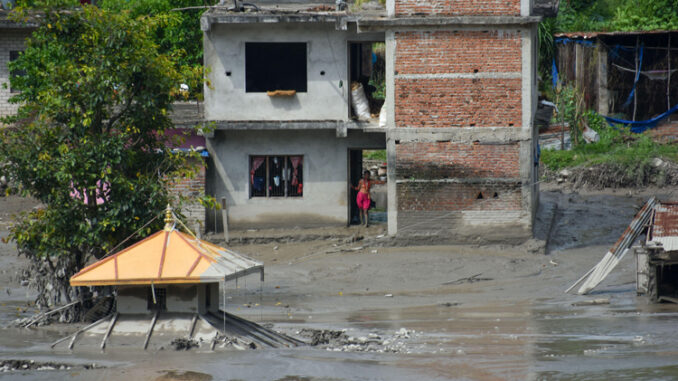
On August 26, 2026, a massive flood occurred on the border of Nepal and Tibet. Many villages were buried under mud and debris [waste or parts of material that are broken or left over]. Seventy schools were destroyed. Forty bridges were wiped out. Over 65,000 people lost their homes. Thousands of people died and thousands more were missing.
Photo Credit: ABACAPRESS/Alamy Stock Photo
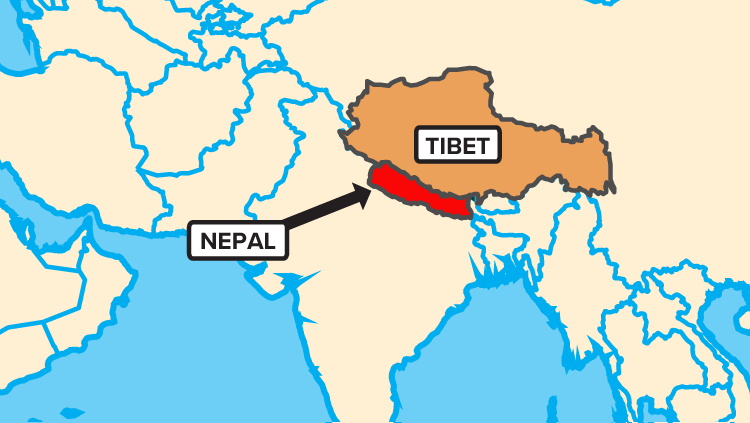
Nepal and the Tibet border each other in a mountainous region north of India.
Nepal is a country that borders India and China. Tibet was once an independent country. Since 1995 it has been part of China and is called the Tibet Autonomous Region. Both areas are part of the Himalayas, a mountain range that includes the highest mountains in the world. Most of the population in this area lives in river valleys. A river valley is a low land between mountains that has a river flowing through it.
Photo Credit: McGraw Hill
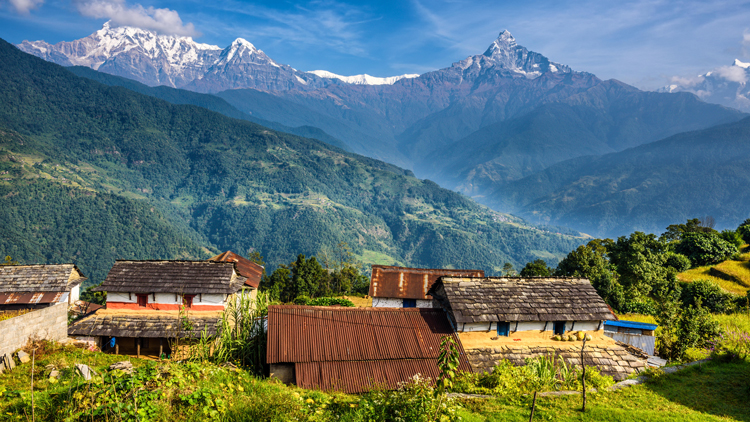
This village in Nepal is in the area that was affected by flooding. The region’s terrain makes flooding a danger.
The flooding was caused by the collapse of a section of a glacier. The collapse caused a landslide [sudden movement of soil or rock from higher ground to lower ground] into the Lhende Khola River Valley below. The landslide was so powerful that, at first, scientists believed it was an earthquake. It caused a powerful wave of ice, water, mud, rocks, and debris to roar through the river valley, destroying everything in its path.
Photo Credit: Nick Fox/Alamy Stock Photo
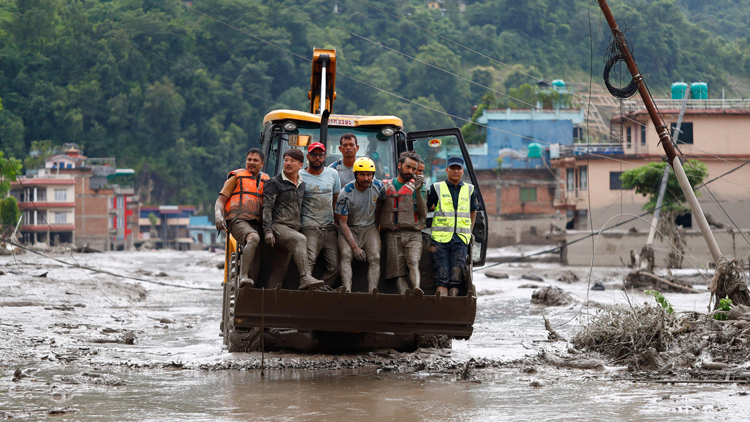
Rescue workers used a bulldozer to get people out of buildings that were damaged along the Trishuli River.
As soon as the flooding began, rescue efforts were launched. Nepal sent over 20,000 people to help, including army units with helicopters and drones. China sent $33 million in aid to Tibet along with soldiers and rescue equipment. More than 10,000 people were rescued and brought to a temporary hospital in the flood zone. Rescue workers continued to search through mud and tunnels to look for survivors.
Many people are living in tents and temporary housing. Because roads and bridges have been destroyed, it is very difficult to get supplies to the area. Countries such as Australia, South Korea, and the United States are providing money and supplies to help the recovery. Organizations such as the United Nations and the International Federation of the Red Cross and Red Crescent Societies are bringing food, water, tents, and mattresses to people who have been affected.
What Can You Do? Research charitable organizations and find ways that they are helping Nepal and Tibet.
Photo Credit: SOPA Images/Alamy Stock Photo