
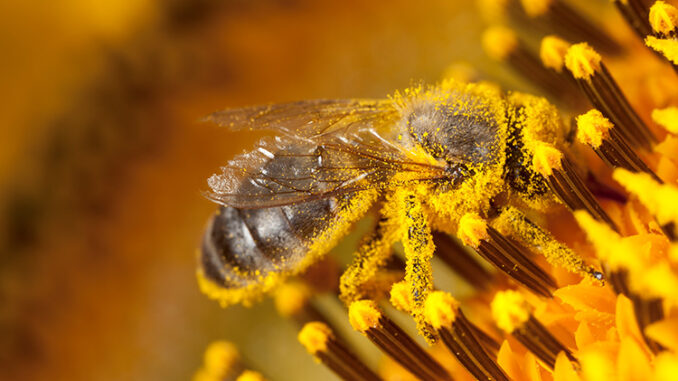
When you observe a bee collecting nectar from a flower, you are watching the first step in the formation of honey. That’s right, honey begins with nectar (a sugary liquid produced by flowers)!
A bee flies from one flower to the next, sucking up nectar through a straw-like structure. It stores the nectar in its honey stomach. When its honey stomach is full, it flies back to its hive and delivers the nectar. Then it goes back out to collect more.
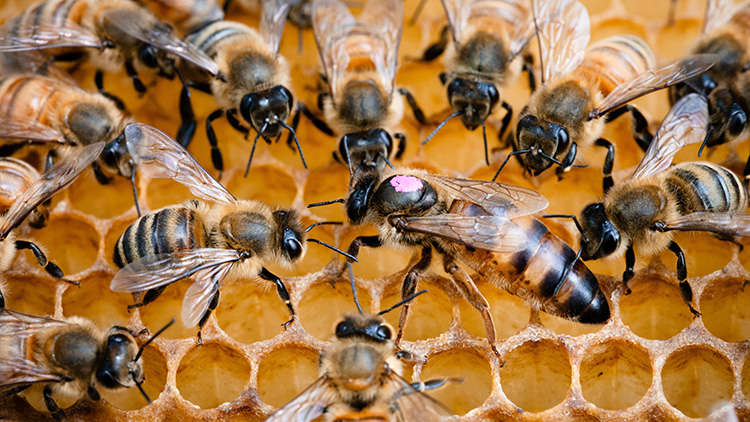
In the hive, other bees start to change nectar into honey. They add saliva (clear liquid made in the mouth) to the nectar. The saliva breaks down the larger molecules (substance made of two or more atoms) of sugar into smaller molecules. The bees move drops of nectar to a honeycomb. They dry the nectar by fanning it with their wings. The nectar changes to honey based on the sugar content and dryness. Once the nectar has become honey, the bees cover the honeycomb with wax which preserves (to keep something from going bad or spoiling) the honey. The bees make the wax themselves.
The bees eat the honey, using the sugar for energy. But they also make more honey than they need, and beekeepers collect the extra honey. The extra honey is what we enjoy on pancakes, toast, or in tea!
Honey has a different color, texture, and taste depending on the flower the nectar came from. For example, honey made from lavender nectar has a light color and thick texture. It tastes sweet, but not too sugary. Honey made from buckwheat nectar has a dark color and smooth texture. It tastes less sweet than many other types of honey.
What Do You Think? Why do you think it is important for bees to preserve honey?
Photo Credit: (t)JLGutierrez/E+/Getty Images, (b)Megan Kobe/Shutterstock