
You may have heard or read about El Niño in a weather report. Meteorologists, scientists who study and predict the weather, talk about how this phenomenon will affect weather in different places. Some areas may have a warmer winter than usual. Other areas may get more rain than normal. But what is El Niño?
To answer this, first we have to talk about what happens normally. Strong winds blow across the Pacific Ocean from east to west along the equator. The equator is an imaginary line that divides Earth into the northern and southern hemispheres. The winds cause warm surface water to pile up on the western side of the Pacific Ocean. Imagine a fan at high speed on one side of a bowl filled with water. The air current from the fan causes water to pile up on the opposite side of the bowl.
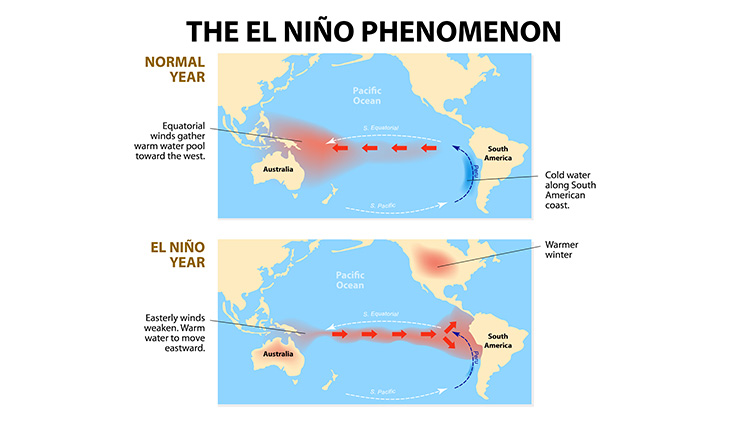
What’s happening on the eastern side of the ocean as water is pushed to the west? That water has to be replaced. Cold water from below the surface rises to the surface. The cold water is full of nutrients. Nutrients are substances living things need to live and grow. The nutrients support living things at the bottom of the food chain. A food chain is a model that shows how energy flows in an ecosystem. Many nutrients for living things at the bottom of the food chain means there will be more food for living things higher on the food chain, such as fish. During normal conditions, the eastern side of the southern Pacific Ocean is known for its productive fishing.
So, how do things change during an El Niño event? The winds that blow across the Pacific Ocean weaken. The warm water in the west moves back to the eastern side. That warm surface water changes both weather and fishing.
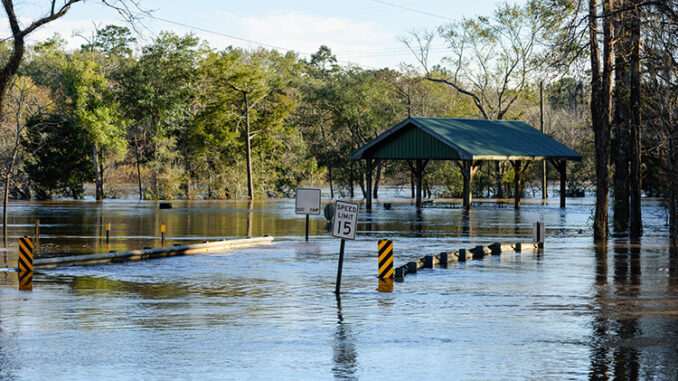
During El Niño events, areas of the north and mid-western U.S. have warmer, drier winters. Areas across the southern U.S. get more rain and have increased flooding. The warm surface water does not have a lot of nutrients. So, fishing on the eastern side of the Pacific is not very productive.
What Do You Think? Scientists can predict an El Niño much better now than in the past. How do you think these predictions help people prepare for the changes in weather that El Niño causes?
Photo Credit: (t)Designua/Shutterstock, (b)Terry Kelly/Alamy Stock Photo