
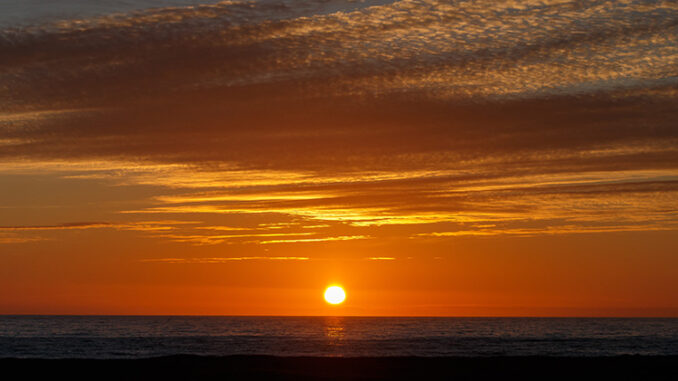
Can you imagine being able to see the sun at night? That is what happens in some countries every summer. The sun never sets!
Throughout the year, days grow longer or get shorter. This is because Earth is tilted as it orbits, or revolves, around the sun. The moment when Earth is tilted closest to or farthest from the sun is called a solstice.
For Northern Hemisphere countries, a summer solstice happens in June. This is the day each year with the longest amount of daylight.
Some countries in northern Europe such as Norway, Sweden, and Iceland celebrate the summer solstice with large festivals in June. The holiday is called Midsummer.
Midsummer celebrations can last several days. There can be dancing around a maypole, which is often a tall wooden pole decorated with flowers. People might wear flower wreaths in their hair.
Many other places around the world also celebrate Midsummer. Some traditions are hundreds of years old.
Photo Credit: Menno Schaefer/Shutterstock
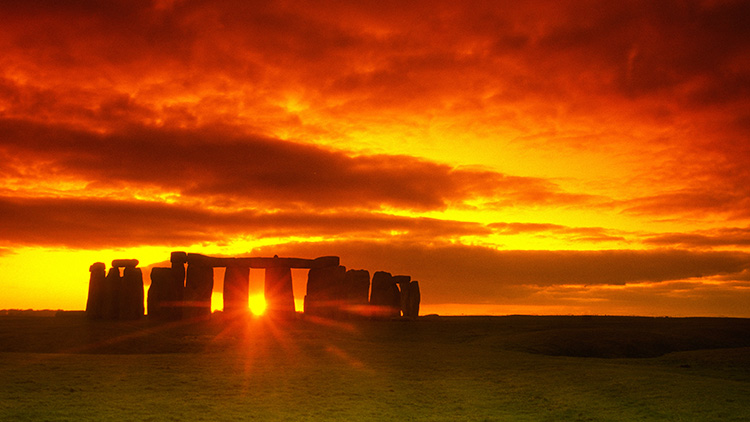
Stonehenge is thought to have been made to frame the movement of the sun.
Stonehenge is a group of massive stone blocks built to make a circle. It was made thousands of years ago in what is now England. We do not know for sure why Stonehenge was built, but we do know the stones were carefully arranged for the sun! On the summer solstice, the sun can be seen to rise exactly over a stone outside the circle called the Heel Stone. It casts a shadow into the middle of the stone circle.
Thousands of people celebrate the summer solstice at Stonehenge each year. Hundreds of thousands more watch online. They wake up early to watch the sun rise over the Heel Stone.
Photo Credit: Laurence Delderfield/Alamy
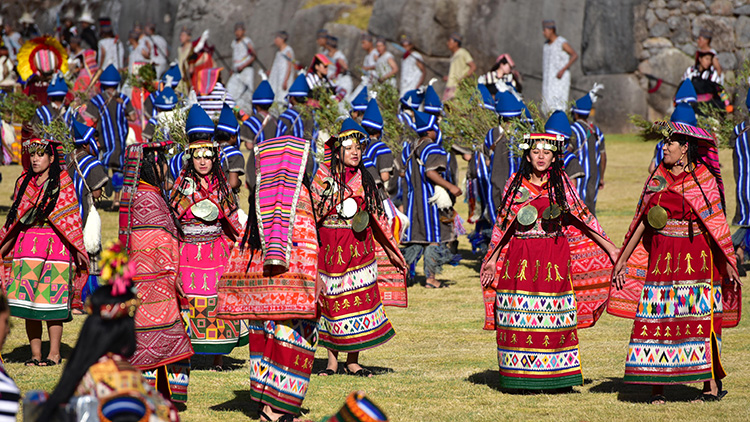
Performances during Inti Raymi show what the Inca ceremony was like
In June, countries in the Southern Hemisphere are tilted farthest away from the sun. This is a winter solstice. This is the day each year with the least amount of daylight. In Peru, this is celebrated with Inti Raymi, which means Sun Festival. This was a ceremony of the Inca Empire in the 1400s and 1500s. It was to celebrate that days with more daylight were now coming.
A re-enactment of that Inca ceremony now happens in Cusco, Peru, around the winter solstice. People dress in clothes like the Inca would have worn. There are traditional rituals, dances, and music.
What Do You Think? Do you enjoy having more daylight in summer? What kind of things do you do on days with more daylight?
Photo Credit: C.Male/Alamy